


Photo Sciences


Separator


Separator
Customer Testimonials
Hear From Our Customers

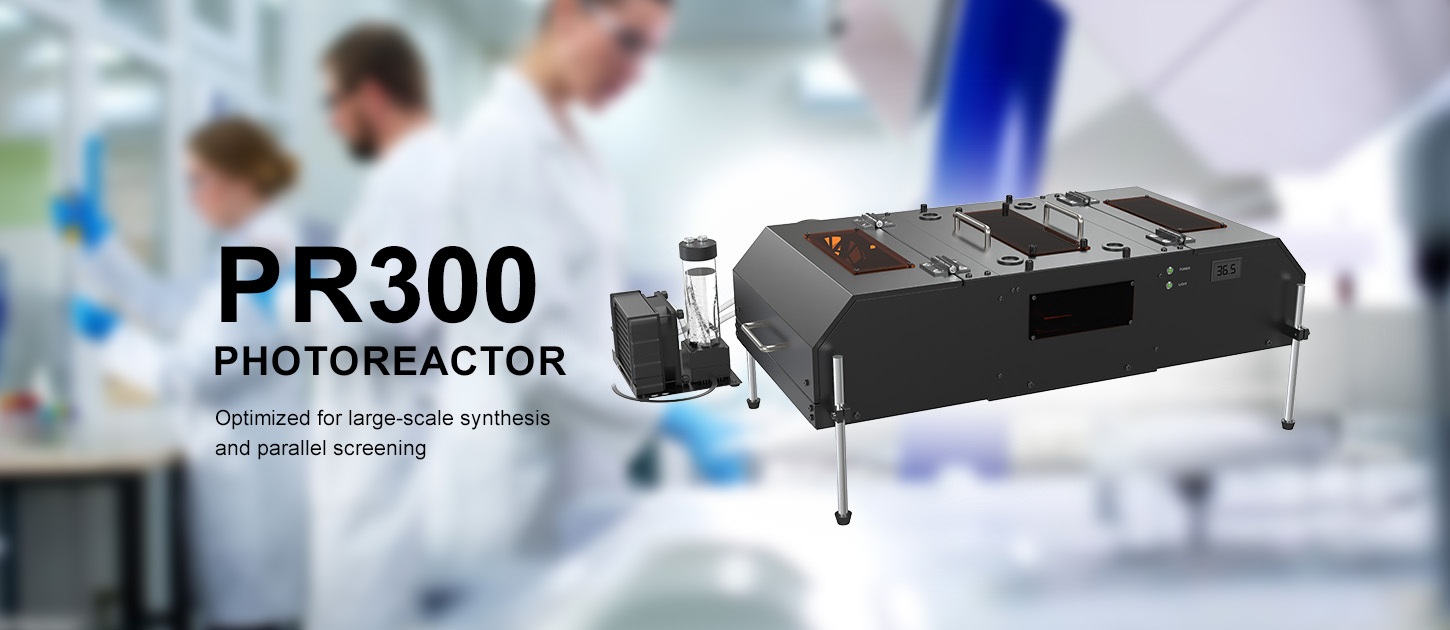
The PR300 provides an exceptional combination of high photon flux and precise thermal management, effectively eliminating overheating in sensitive batch reactions. The integrated immersion cooling bath ensured consistent temperatures and strong reproducibility during complex Buchwald-Hartwig and Minisci-type transformations. Its modular design is highly adaptable, offering a seamless path to explore flow chemistry and high-energy purple light conditions. This is a versatile, innovative platform for expanding photochemical reactivity space. ( > See More )
Principal Scientist at a Global Pharmaceutical Company
The PR300 offers significant advantages in throughput and versatility. It supports medium-throughput screening with up to 16 simultaneous reactions, making it easy to identify optimal conditions. Once established, those conditions can be scaled up using larger vial sizes (20-40 mL) to produce quantities up to grams—all within the same system.
Lead Scientist at a major pharmaceutical company
The PR300 is a very effective photoreactor, especially in regimes where reactions are photon-limited. Overall, the PR300 individual lamps are my favorite component, and I highly recommend how compact and useful they are.
Diego Granados, Knowles Group, Princeton University
The PR300 is easy to assemble and use, and provides a cost-effective solution for screening reactions that require high photon flux with temperature control.
Alexander Cusumano, Doyle Group, UCLA
The PR300 setup gives uniform and reproducible results, which is great. The Water Cooling System is efficient in keeping the vial temperature down.
Reem Nsouli, Ackerman-Biegasiewicz Group, Emory University
We have successfully applied the PR300 photoreactor in both batch and flow photoreactions. Its high photon output, modular design, and compatibility with different vessel formats make it a versatile platform for synthetic photochemistry. The system has also shown promising potential for adapting to photo-flow applications.
Wen-Hsuan Lee, Liao Group, NSYSU
We have reported positive outcomes from using the PR300 and observed consistent results across different positions within the water-cooling tank. We will keep using the complete PR300 system to optimize our photoreactions.
Lead Scientist at a major pharmaceutical company
The PR300 is an excellent standardized alternative to the popularized Kessil Brand LEDs that have been rapidly adopted by the synthetic organic chemistry community. I recommend it for those seeking higher throughput and control over reaction optimization screening for photochemistry.
Lead Scientist at a major pharmaceutical company
Recurring challenge in photochemistry under high photon flux conditions is the difficulty of maintaining precise temperature control in batch reaction systems. Elevated light intensity often introduces significant thermal input, which can lead to increased reaction temperatures, inconsistent performance, and undesired degradation pathways. This issue is especially well recognized in photochemical Minisci-type reactions. In this context, the immersion cooling bath integrated into the PR300 setup represents a clear practical advantage, enabling consistent and precise control of the internal reaction temperature even during operation at high photon flux. By mitigating overheating while preserving intense irradiation conditions, the system improves reaction reliability and broadens the range of photochemical transformations that can be explored.
Beyond temperature regulation, the PR300 setup also benefits from a relatively uniform cross section of light exposure, which supported strong reproducibility in a generalized photo-Buchwald Hartwig-type cross-coupling reaction inspired by the work of Ananikov, Konig, and co-workers. The modular and highly adaptable internal configuration further enhances the utility of the platform by encouraging investigation across multiple experimental formats. In particular, the design appears well suited to the incorporation of a coil, offering a promising opportunity to evaluate flow chemistry applications while maintaining effective temperature control through submersion in the cooling bath.
Another significant strength of the system is its potential to facilitate the practical use of lower-wavelength, higher-energy purple light conditions, such as those employed in studies from the Parasram and Leonori Groups. Because these conditions are often accompanied by overheating concerns, the PR300 setup may help make them more accessible and reproducible. In turn, this could enable exploration of new reactivity space, including oxidative cleavage processes that have traditionally been more closely associated with osmium-based methods.
Overall, the PR300 setup appears to offer a thoughtful combination of high photon flux capability, effective thermal management, reproducible light delivery, and experimental flexibility. It was a pleasure to evaluate this system, and I appreciate the opportunity to explore the innovative possibilities it presents for expanding photochemical reaction space.
— Principal Scientist at a Global Pharmaceutical Company
Separator

Congratulations to
Professor David MacMillan
Princeton University
Recipient of the The 2021 Nobel Prize in Chemistry
Prize motivation: “for the development of asymmetric organocatalysis”
Separator
Photo Science Publications FEATURING Kessil
By Applications
VIEW
Metal Catalyst
VIEW
Organic Catalyst
VIEW
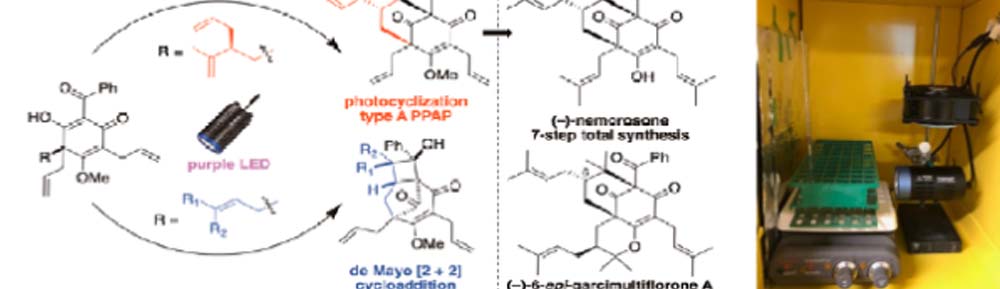
Direct Photoexcitation
VIEW
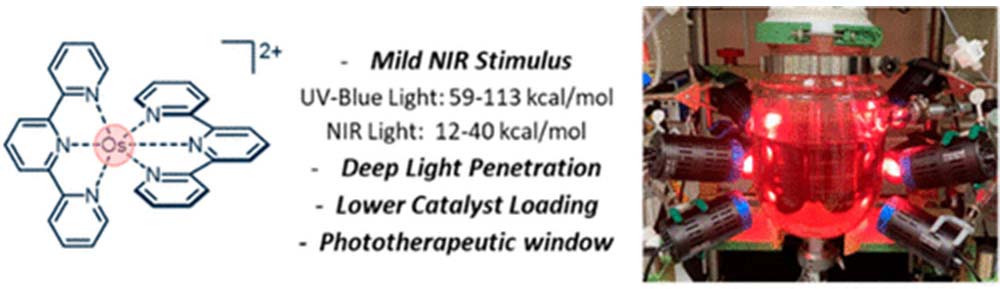
Beyond Blue
VIEW
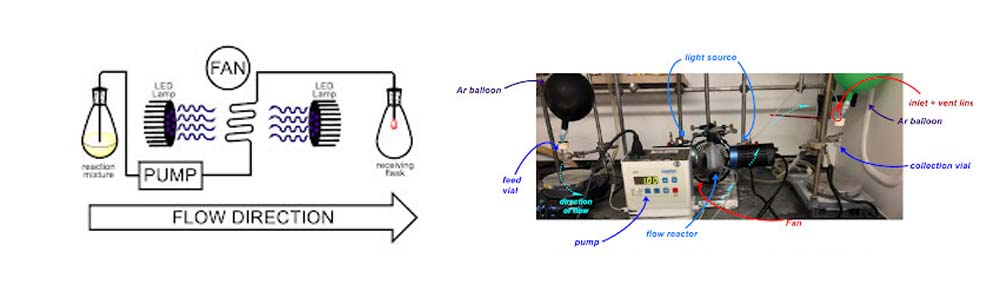
Photoreactor Design
By Research Groups
MacMillan at Princeton University
Doyle at University of California, Los Angeles (formerly Princeton University)
Stephenson at University of Michigan
Molander at University of Pennsylvania
Knowles at Princeton University
Nicewicz at University of North Carolina at Chapel Hill
Yoon at University of Wisconsin -Madison
Rovis at Columbia University
Gevorgyan at University of Texas at Dallas
Leonori at University of Manchester
Zysman-Colman at University of St Andrews